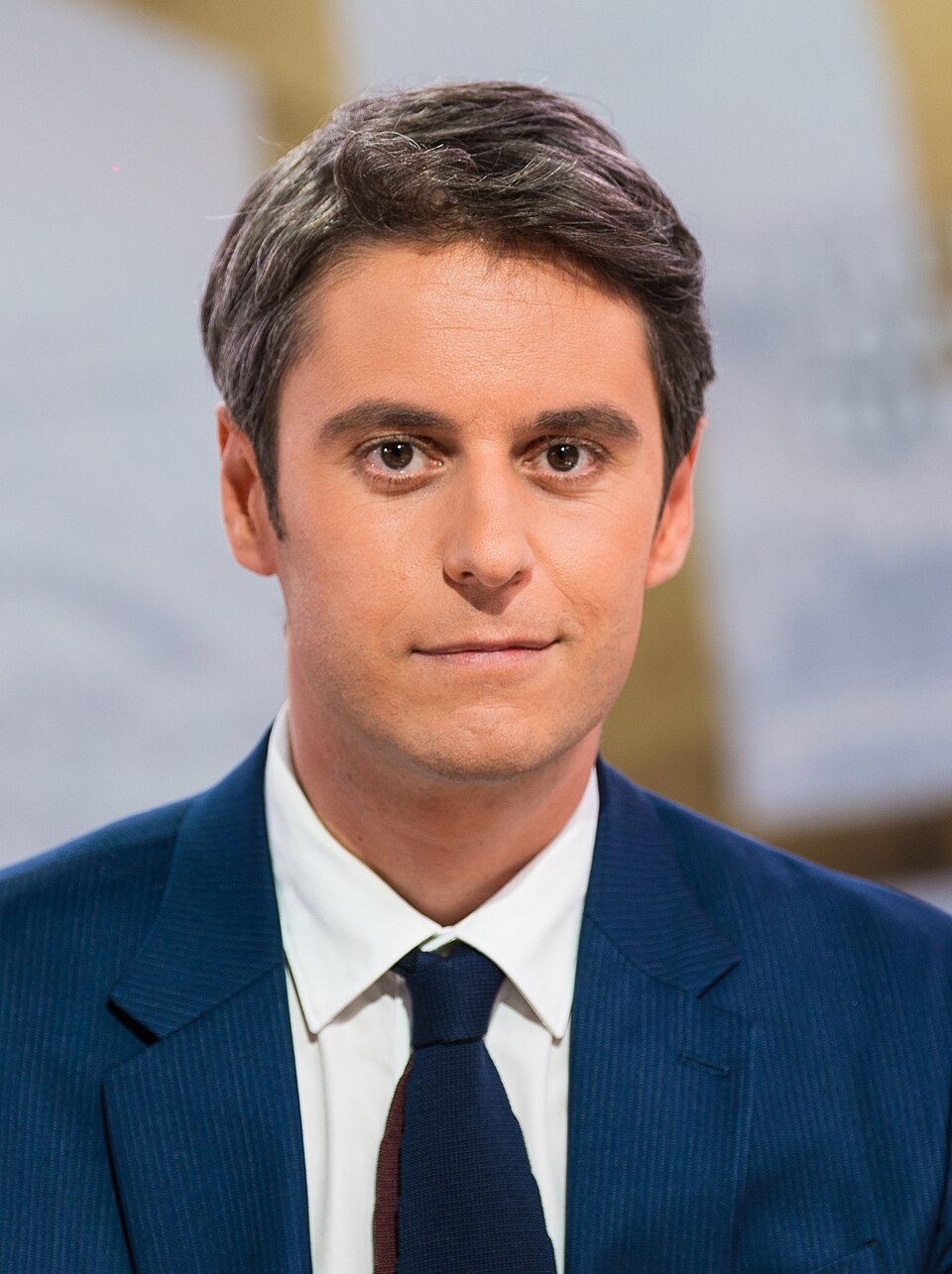
Gabriel Attal's Crusade Against the Reactionary International: Redefining Global Political Battlegrounds
In an era increasingly defined by geopolitical shifts and domestic political fragmentation, former French Prime Minister Gabriel Attal has emerged as a prominent voice, articulating a bold challenge to what he terms the "Reactionary International." This comprehensive article delves into the essence of **Attal's vision internationale**, exploring his diagnosis of contemporary political ills, his strategic positioning, and his ambitious call for a progressive coalition to safeguard democratic values against rising populist and authoritarian forces worldwide. His recent pronouncements signal not just a domestic political strategy for France but a broader philosophical framework aimed at galvanizing centrist and progressive elements across the globe.
Decoding the "Reactionary International": A Global Threat Assessment
Gabriel Attal's concept of the "Reactionary International" is more than a catchy political slogan; it's a stark warning about a confluence of forces he believes are actively undermining democratic principles and societal progress. At a pivotal meeting on April 6th, 2025, in Saint-Denis, Attal unequivocally identified figures such as Donald Trump, Vladimir Putin, and France's own Marine Le Pen and her Rassemblement National (RN) as key purveyors of this global threat. For Attal, these actors represent a common ideology that transcends national borders, characterized by a rejection of scientific consensus, a disdain for fundamental liberties, and a systemic effort to erode the very institutions of democracy.
This "Reactionary International" thrives on a narrative of grievance, often fanning the flames of nationalism and cultural division. It proposes simplistic solutions to complex problems, frequently resorting to authoritarian tendencies to consolidate power. Attal posits that this global network shares tactics, disseminates misinformation, and seeks to destabilize established norms to its own advantage. His articulation of this threat is a strategic move to frame the political discourse not as a traditional left-right divide, but as a fundamental struggle between those who uphold democratic values and progress, and those who seek to roll back societal advancements under the banner of a perceived golden past. This framing allows him to unite diverse political actors who might otherwise disagree on specific policy points but share a common commitment to liberal democracy.
Attal's Domestic Political Challenge: A Nation Adrift
Attal's international vision is deeply rooted in his trenchant analysis of France's current domestic political landscape. He describes a nation experiencing a profound sense of "powerlessness," where politics is increasingly viewed as a problem rather than a solution. This sentiment, he warns, risks transforming French democracy into a "vetocracy"—a system where public action is perpetually blocked, and nothing gets done. This paralysis, he argues, is exacerbated by the radicalization of France's traditional "parties of government." He observes the Parti Socialiste (PS) veering towards "political submission" to the radical left's La France Insoumise (LFI), while Les Républicains (LR) drift into "intellectual alignment" with the far-right Rassemblement National (RN).
This radicalization, Attal believes, has crippled these parties' ability to unite a majority of French people, leaving a vast political vacuum in the center. It's within this context that Attal has strategically positioned himself and the Renaissance party. While his past stances, such as on Muslim girls wearing the veil, have sometimes drawn him closer to the right, his current efforts aim to clarify his political identity as a bulwark against both extremes. He seeks to reclaim the center ground, not through timid compromise, but through a robust defense of republican values and a pragmatic approach to governance. Understanding this domestic struggle is crucial to grasping the urgency and relevance of **Attal's vision internationale**; for him, the internal fragmentation in France is a microcosm of a broader global battle. His political stance, therefore, isn't just about French politics but about redefining it amid these global threats. Readers can gain further insight into his comprehensive strategy by exploring
Attal's Stance: Redefining French Politics Amid Global Threats.
Forging a Progressive Coalition: Attal's Counter-Strategy
To counter the "Reactionary International" and the domestic political paralysis, Gabriel Attal champions the urgent need for a "coalition progressiste." This isn't merely a theoretical concept; it's an active political project already underway. His "summit for democracy" on March 24th in Paris, which brought together European centrists, laid the groundwork for this broader alliance. The subsequent gathering in Saint-Denis saw him flanked by key figures like François Bayrou and Édouard Philippe, demonstrating a visible unity within the central camp, despite any latent rivalries for the 2027 presidential election.
Building such a coalition entails more than just shared political affiliation; it requires a renewed commitment to dialogue, a clear articulation of shared values, and strategic alliances that can transcend traditional party lines. Attal's call is for a pragmatic, results-oriented political force that can offer tangible solutions to citizens, thereby restoring faith in democratic institutions. He recognizes that simply denouncing the extremes is not enough; a credible alternative must be built on a foundation of shared purpose and a forward-looking agenda. This approach involves emphasizing common ground on issues like climate action, economic innovation, and social cohesion, rather than being bogged down by ideological minutiae. For those interested in the broader implications of this strategy, further details can be found in
Attal's Vision: Uniting Global Progressives Against Populism.
**Actionable Advice for Centrist Movements:**
* **Define a Clear Narrative:** Articulate a vision that directly addresses citizens' anxieties while offering hopeful, actionable solutions, rather than simply reacting to populist narratives.
* **Build Broad Alliances:** Seek common ground with diverse groups that share a commitment to democratic values, even if they differ on specific policies.
* **Focus on Tangible Results:** Demonstrate competence and deliver on promises to rebuild public trust in political institutions.
* **Communicate Effectively:** Utilize modern communication channels to cut through misinformation and directly engage with voters.
The Road to 2027 and Beyond: Attal's Emerging Global Stature
Gabriel Attal's "crusade" against the "Reactionary International" is undoubtedly a strategic move with the 2027 French presidential election firmly in sight. His impassioned speeches, particularly the one following Marine Le Pen's condemnation for misuse of European funds, complete with the direct challenge "Tu voles, tu payes" ("You steal, you pay"), were designed to reposition him as the primary bulwark against the far-right. This moment, combined with his broader geopolitical rhetoric, aims to breathe new life into Renaissance, a party that has experienced a decline in momentum.
However, **Attal's vision internationale** transcends mere domestic political ambition. By framing the battle against populism as a global struggle, he is elevating his profile beyond French borders, positioning himself as a significant voice among European centrists and potentially on the international stage. His strategy is to appeal to a populace weary of ideological extremism and seeking pragmatic, unifying leadership. By presenting himself as a defender of democratic principles against a globally interconnected threat, he aims to demonstrate that the solutions to France's challenges are intrinsically linked to a robust internationalist stance. This proactive approach seeks to resonate with citizens who feel increasingly vulnerable to global destabilizing forces, offering a sense of direction and purpose.
Conclusion
Gabriel Attal's bold articulation of a "Crusade Against the Reactionary International" signifies a crucial moment in contemporary politics. His **attal vision internationale** is a multifaceted strategy designed to address both France's internal political fragmentation and the broader global surge of populism and authoritarianism. By identifying common threads among diverse anti-democratic forces and advocating for a strong, progressive coalition, Attal is attempting to redefine the political battleground. His project is ambitious, aiming not only to revitalize French centrist politics but also to inspire a broader international movement dedicated to safeguarding democracy, fostering progress, and restoring faith in collaborative governance. The success of this crusade will undoubtedly shape the future trajectory of France and potentially influence the wider European and global political landscape in the years to come.